What Should You Check Before Selecting a Rolling Mill Gear Box?
Choose a rolling mill gear box by matching its torque capacity, gear ratio, shaft arrangement and duty rating to the mill’s operating requirements. The selection must also account for shock loads, reversing cycles, lubrication and heat generated during operation.
A rolling mill gear box transfers power from the motor to the rolls through the drive system. Its performance affects how consistently the mill handles material under load. Choosing a unit only by motor power or installation size can leave other requirements unchecked.
For a new plant or replacement project, begin with the rolling process. Identify the material, rolling speed, reduction per pass and operating schedule. These details help the supplier assess a gearbox that suits your production requirements and maintenance access.
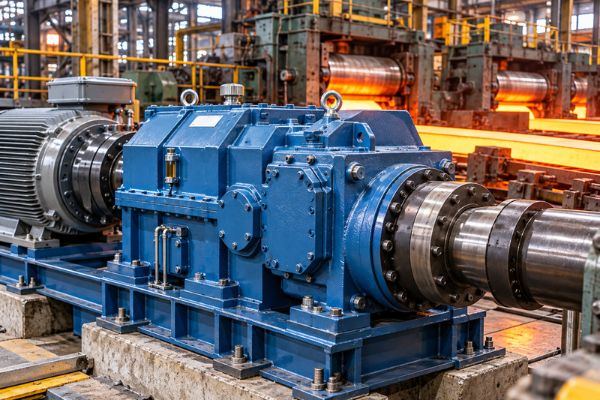
Start With Your Rolling Mill Application
The gearbox specification should reflect the type of mill and the work each stand performs.
A mill rolling hot steel billets experiences different conditions from a mill processing thin cold strip. Roughing and finishing stands may also have different speed and torque requirements.
Before requesting a quotation, identify:
- Hot rolling or cold rolling process
- Material grade and incoming dimensions
- Finished product and required reduction
- Mill stand type and roll diameter
- Normal and maximum rolling speeds
- Daily operating hours
- Starts, stops and reversing cycles
Also explain any planned production changes. A gearbox selected for the current product range may need reassessment if the plant later processes wider, thicker or harder material.
The supplier should review the actual operating conditions before recommending a model.
How Do You Select the Right Gear Box Torque Capacity?
Select torque capacity using the mill’s normal working load and expected peak loads.
Motor power alone does not describe gearbox loading. The same power transmitted at a lower shaft speed produces higher torque.
For a rotating shaft, nominal torque can be estimated using:
Torque in Nm = 9550 × Power in kW ÷ Speed in RPM
For example, 75 kW transmitted at 100 RPM corresponds to approximately 7,163 Nm. This is a basic calculation at the stated shaft, not a complete rolling mill gearbox selection.
A final assessment must also consider:
- Load changes when material enters the rolls
- Acceleration and deceleration
- Reversing operation
- Short duration overloads
- Drive control and torque limits
- Gear, shaft and bearing capacity
Ask the supplier to state the allowable continuous torque and peak torque separately. This makes it easier to compare quotations against the same operating requirements.
How Do You Choose the Correct Gear Ratio?
Choose the gear ratio to deliver the required roll speed across the motor’s intended operating range.
For a simple reduction gearbox:
Gear Ratio = Input Speed ÷ Output Speed
If the gearbox input runs at 1,000 RPM and the required output is 100 RPM, the nominal reduction ratio is 10 to 1.
However, roll diameter also affects the material’s surface speed. Two rolls operating at the same RPM can have different surface speeds if their diameters differ.
Confirm these details before finalising the ratio:
| Selection Detail | Why It Matters |
|---|---|
| Motor Speed Range | Defines available gearbox input speeds |
| Required Output RPM | Sets the reduction requirement |
| Roll Diameter | Connects roll RPM to surface speed |
| Other Transmission Stages | Affect the overall drive ratio |
| Direction of Rotation | Must match the mill arrangement |
| Future Product Range | May require a wider operating speed range |
If the motor uses a variable frequency drive, check gearbox lubrication and thermal performance across the proposed speed range.
Check Shock Loads and Reversing Duty
A rolling mill gear box must suit the load pattern of the mill, including sudden changes during operation.
Material entering the roll gap can create a rapid increase in torque. Reversing mills also change direction repeatedly, adding demands that steady operation does not capture.
Tell the supplier how often the mill reverses, how quickly it accelerates and what overload protection is available.
A service factor provides an allowance for specified operating conditions. It should be selected through an engineering assessment rather than applying one fixed value to every mill.
Two gearboxes with the same nominal power rating may have different suitability for rolling duty. Compare the stated application rating, load assumptions and permitted overload duration.
Match the Shaft Arrangement and Installation Dimensions
A replacement rolling mill gear box must match the drive connections and installation layout.
Some mills use a separate speed reducer and pinion stand. Other arrangements combine functions within a purpose designed unit. Confirm which equipment the enquiry covers.
Check the following before ordering:
| Item to Confirm | What to Review |
|---|---|
| Input Shaft | Diameter, length and connection type |
| Output Shafts | Number, spacing and rotation direction |
| Shaft Height | Alignment with the existing drive |
| Mounting Holes | Position and foundation compatibility |
| Couplings or Spindles | Dimensions and torque rating |
| Overall Size | Installation and removal space |
| External Shaft Loads | Forces transmitted by connected equipment |
For replacement projects, provide dimensional drawings and clear photographs. A gearbox that fits the foundation may still require different couplings or changes to the surrounding drive.
Ask for an approved general arrangement drawing before manufacturing or dispatch.
Why Do Lubrication and Cooling Matter?
Lubrication and cooling help the gearbox maintain suitable operating conditions under load.
The lubrication system must supply the gears and bearings with the specified oil. The cooling arrangement must manage heat generated during operation, particularly during long production shifts.
Depending on the design, a gearbox may use splash lubrication, forced oil circulation or additional cooling equipment.
Confirm:
- Recommended oil grade and viscosity
- Required oil quantity
- Lubrication method
- Filtration requirements
- Cooling system requirements
- Permitted operating temperature
- Inspection and oil change instructions
For circulating oil systems, ask which pressure, flow or temperature alarms are required.
Keep inspection points, filters and drain connections accessible. Maintenance becomes harder when the gearbox is installed without space to service these components.
Compare Gear Box Quotations Beyond Purchase Price
Compare quotations using the same duty conditions and technical scope.
A lower purchase price may exclude equipment or documentation included in another offer. Cooling systems, couplings, testing and installation support can change the total project cost.
Review each quotation for:
- Continuous and peak torque ratings
- Gear ratio and speed range
- Application and service factor assumptions
- Lubrication and cooling scope
- Mounting and shaft dimensions
- Inspection and testing documents
- Delivery schedule and warranty terms
- Spare parts availability
Also ask how replacement bearings, seals and gears will be identified. Clear parts documentation can reduce delays during future maintenance.
Evaluate the gearbox over its expected operating life, including servicing and potential downtime.
What Should Buyers Send With a Gear Box Enquiry?
A detailed enquiry helps a rolling mill gear box manufacturer or supplier assess the application accurately.
Buyers in Ahmedabad, Gujarat or other industrial locations should provide:
- Mill type and finished product
- Motor power and speed range
- Required gearbox output speed
- Working torque and available peak load data
- Operating hours and reversing frequency
- Shaft arrangement and dimensional drawings
- Ambient conditions and cooling availability
- Existing gearbox details, if replacing a unit
Explain any previous failures. Repeated tooth damage, overheating or bearing problems may involve alignment, lubrication, overloading or the wider drive system.
Replacing the gearbox without investigating the cause can allow the problem to return.
Conclusion
The right rolling mill gear box should match the mill’s torque, speed, load pattern and installation layout. Review lubrication, cooling and maintenance access alongside the mechanical rating.
Before ordering, obtain written confirmation of the selection assumptions and approve the dimensional drawing. This gives your plant and supplier a clear specification to work from.
For your rolling mill gearbox enquiry, share the application details and drawings with Speedo Gear to discuss suitability, quotation scope and delivery requirements.
FAQs
Provide motor power, input speed, required output speed, torque data, mill type and operating hours. Include shaft dimensions, installation drawings and details of reversing or shock loads.
No. Motor power must be assessed together with shaft speed, working torque, peak loads and operating duty. Mounting, lubrication and cooling requirements also affect selection.
Only if the manufacturer confirms suitability for the mill’s loading and duty. Rolling applications can involve shock loads and reversing cycles that require additional assessment.
Compare the existing gearbox specifications with the plant’s current requirements. Confirm ratio, torque ratings, shaft positions, coupling dimensions and lubrication arrangements before ordering.
Price depends on torque capacity, ratio, shaft arrangement, design requirements, lubrication, cooling and custom dimensions. Testing, accessories and support included in the quotation also affect cost.
Yes, when the gearbox is rated for the proposed speed and torque range. The supplier must check lubrication, cooling and loading at both low and high operating speeds.
Choose a supplier that reviews your mill application, provides clear ratings and submits dimensional drawings. Confirm testing, warranty terms, spare parts support and delivery scope in writing.